Christophers Hillman.
basil | 11/8/2005 | 9:38 am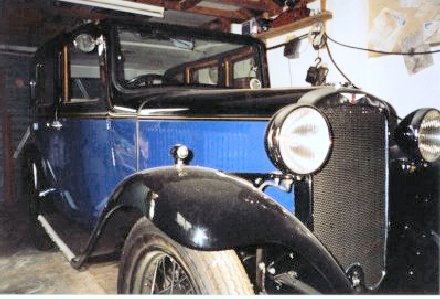
Christophers Project in Worcester.
A local builder restored this old 1930’s Hillman, to perfection in his spare time.
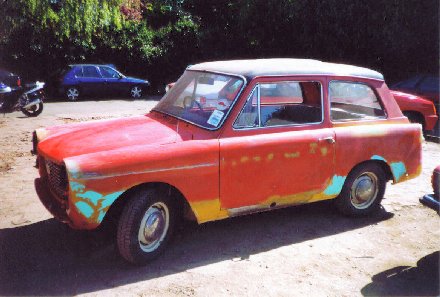
Restoration Begins.
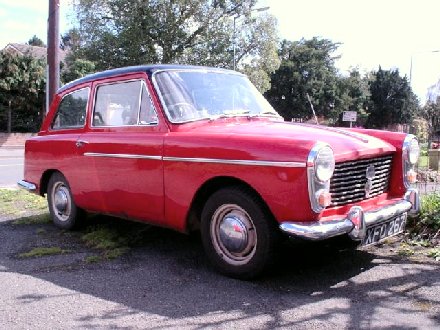
Peters Worcester Banger.
A friend restored PTB’s Austin A40 Farina for a pittance.
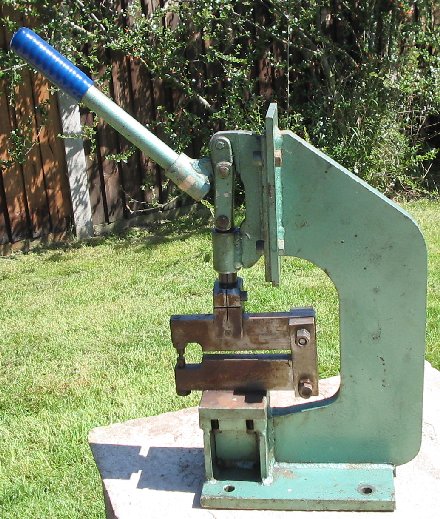
A good Home has now been found for this Brake Shoe Riveting Tool.
(Could this be a museum piece?)
This now redundant press was once used by motor factors to speed up re-riveting brake linings.
Before the time when lined brake shoes were available ready made, to fit to your car, brake linings only were sold in a kit, complete with rivets for owner, mechanic or Motor Factor to fit to brake shoes. Some firms even supplied brake lining in a strip this meant cutting to size then drilling and countersinking rivet holes with a special tool, before fitting to shoe. Asbestos was used for brake linings at this time, making relining brake shoes an extremely hazardous operation.
Replacing linings entailed removing worn shoes from car, chiselling off rivets then fitting linings to shoes first with a special clamp to hold linings close to shoe, then riveting with bifurcated rivets. To test, if when holding up to light source, any light could be seen between shoe and lining it would have the effect of making brakes squeal and a loss of efficiency, this meant doing the job again, making twice the work.
Brake shoes for most cars sold today are supplied with linings bonded to shoe, a much better option, also asbestos is not used in manufacture.
The harder lining material used on modern cars tend to wear brake drums and brake discs out much faster then when asbestos friction products was used.


